
The Congregation was founded in Chiavari by St. Anthony Gianelli (1789-1846) on January 12, 1829.
As Archpriest in Chiavari, Anthony Gianelli was called to serve on the board that directed the Hospice of Charity and Work, a ministry dedicated to the care and education of orphan girls. Recognizing the need to provide good teachers for the children, he gathered the first thirteen women, who began living in community and practicing Eucharistic worship, thus giving rise to the Congregation.
In his writings he recounts that beautiful moment: “… It was on that evening that thirteen Daughters, coming from different towns and places (some without even knowing one another), gathered together. They were of different ages and conditions, yet all inspired by the same spirit and willing to live together in perfect community… When considering a title for them, it was decided to call them DAUGHTERS OF MARY and, referring to those who would remain in Chiavari, to add OF THE GARDEN.”
The Sisters’ ministry began at the Hospital of Chiavari (in 1831), even before their work at the orphan hospice (in 1834), for which the foundation had originally been conceived. Within a few years, it spread throughout Liguria, from La Spezia to Ventimiglia, taking on additional works of charity as well. (cf. A. Gianelli, Memoirs, 1828).
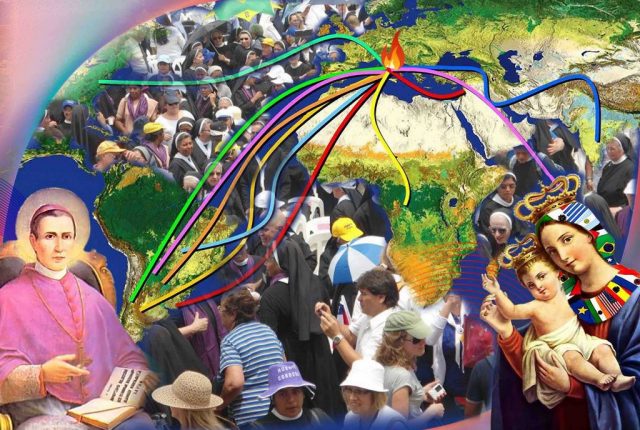
One of the most beautiful pages in the history of the Institute is that of its expansion throughout the world, which began on August 23, 1856, when eight Sisters, led by Mother Chiara Podestà (sister of Mother Caterina), embarked in Genoa bound for America, carrying in their hearts the joy and dream of all missionaries.
It was a long, difficult, and dangerous journey, which ended on November 18, when, upon arriving in Uruguay, they took charge of the Maciel Hospital in Montevideo.
They were the first Italian Sisters of Charity in Latin America and in the Oriental Republic of Uruguay, the first Sisters of the Institute on mission outside their homeland.
A few years later (in 1859), the Sisters began serving at the women’s hospital in Buenos Aires, Argentina, where they soon opened many new missions, both educational and charitable.
In 1885, Monsignor Mariano Soler, the first Archbishop of Montevideo and a confrere of the Congregation, visited Palestine.
Near the oasis of Etham, in Solomon’s gardens (Ortàs to the Arabs), he was captivated by the beauty and biblical meaning of the place, which he associated with the presence of Our Lady of the Garden (cf. Song 4:12), so dear to him.
He envisioned a sanctuary to be built there and entrusted to the Daughters of Our Lady of the Garden.
Thus, in 1901, nine Sisters departed from Montevideo and took custody of the Sanctuary of Ortàs.
At the same time, they began serving the poor and the sick of the area (an entirely Islamic village). This was followed by the opening of an orphanage and later a kindergarten, as well as offering hospitality to priests, religious, and laypeople who came to the Sanctuary for retreats and spiritual exercises.
In 1955, the Daughters of Mary were also called to Bethlehem to serve the poorest among the poor: elderly, poor, and abandoned women.
In 1908, the Sisters arrived in Brazil, taking charge of a school in Dom Pedrito.
On March 7, 1915, the Daughters of Mary departed from Buenos Aires for Chile to care for the sick in the hospital of Vallenar.
In 1945, four Sisters departed from Buenos Aires for Asunción, Paraguay, to care for tuberculosis patients at the Bella Vista Sanatorium, now the National Institute for Respiratory and Environmental Diseases “Prof. Juan Max Boettner.”
In 1949, six Sisters departed from the port of Buenos Aires for Spain. They were headed to Guriezo, where the legacy left by a wealthy woman made it possible to open a school, the first work in that land.
In 1961, the Bishop of Norwich granted permission to the Congregation to establish a foundation in his diocese in Connecticut, with the purpose of caring for the domestic service of Marianapolis Preparatory School. Thus, in 1962, the doors of the United States were opened.
In 1976, the Bishop of Indore appealed to the Mother General, asking her to send a community of the Daughters of Mary to address the shortage of missionary forces engaged in evangelization and human development.
Almost at the same time, a similar request came from the Bishop of Khandwa.
Thus, in the year marking the 150th anniversary of the foundation of the Institute (1979), a first group of Indian Sisters returned to India to prepare for the opening of the first two communities in the state of Madhya Pradesh.
The year 1989, marking the bicentennial of the birth of St. Anthony Gianelli, concluded with the beginning of a new mission in Africa, in Kinshasa, in the Democratic Republic of the Congo (then Zaire), where the Sisters carry out pastoral, human, and social development activities.
In 1995, a Community was opened in Jordan, though it would close a decade later.
In 2001, the Daughters of Mary arrived in Bolivia, in Potosí, a place poor in resources yet rich in faith, situated at 4,000 meters above sea level.
On September 24, 2014, the day on which the heavenly birth of Mother Caterina Podestà is remembered, the way opened for the FMH toward a new mission in Papua New Guinea, in the Diocese of Madang.
The new community, composed of three Sisters, immediately took on the responsibility of teaching in the diocesan school, caring for families and young people in the villages, creating a social assistance center, and carrying out projects for the promotion of women and children.
The Sisters are also present in the Parish, where they provide catechesis and lead prayer together with women and young people.
The diocesan approval came in 1853, when the Church of Genoa officially recognized and welcomed the Institute.
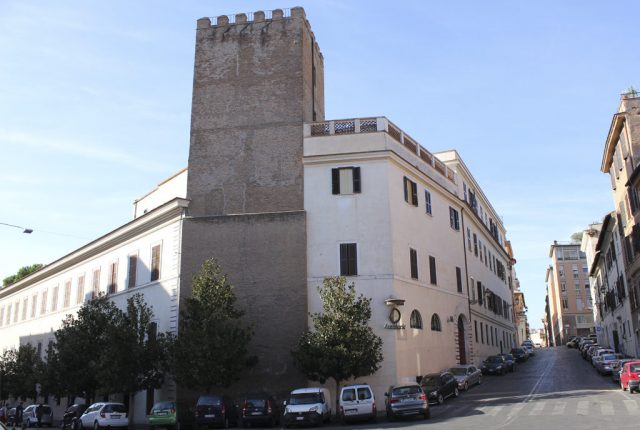
However, it was on March 10, 1868, that the Institute obtained pontifical approval, and the house in Rome was established by Pius IX as the General House of the Congregation.
In 1882, the Institute received the definitive approval of its Constitutions.
If you aren't a member yet, sign up to receive our newsletter